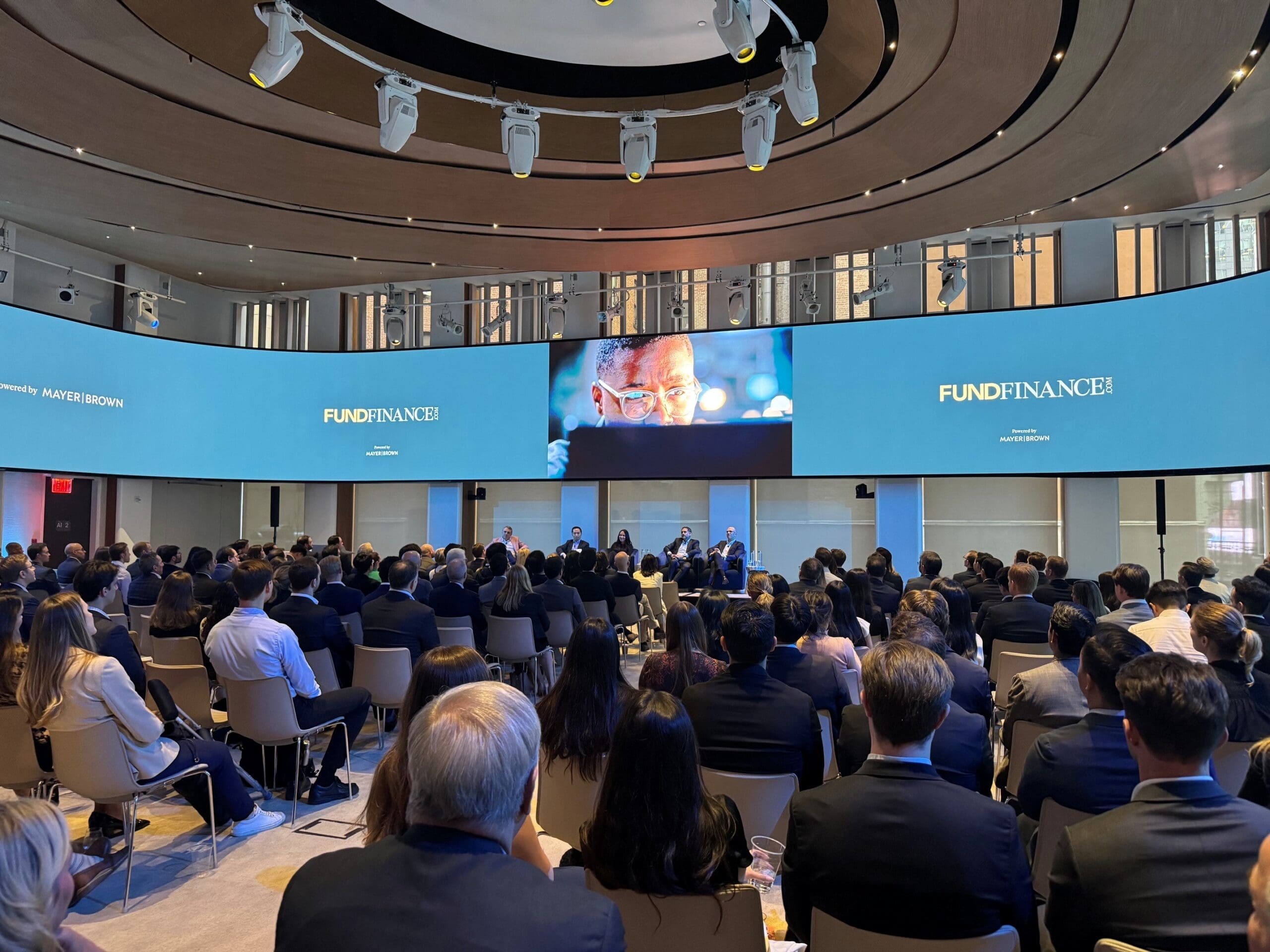
Mayer Brown lawyers and distinguished outside panelists discussed fund finance market trends during our event on May 7, 2026.
Key Takeaways
The Convergence of Insurance Capital and Fund Finance Panel
- There continues to be growing appetite from insurance asset allocators to participate in the fund finance market as insurers seek access to private market opportunities that can support portfolio diversification, yield generation, and long-term capital deployment.
- Optimizing insurance company investments through structured solutions, including rated note feeders and collateralized fund obligations, is a key consideration as market participants look to improve capital efficiency, liquidity management, and investment scalability.
- Market participants are continuing to innovate around insurance company investments in private markets, with significant future growth expected as insurers, asset managers, lenders, and sponsors develop new structures to meet evolving investment, regulatory, and financing needs.
Private Credit Market Trends Panel
- Private credit remains attractive to borrowers because it offers certainty of execution, speed, flexibility, and tailored financing solutions, while the asset class continues to expand beyond the middle market into increasingly competitive sponsor-backed, large-cap, NAV, and fund finance opportunities.
- Competition with banks is increasing as syndicated markets reopen and banks re-enter portions of the leveraged lending market, but regulatory and balance sheet constraints are also driving more strategic partnerships between banks and private credit firms through risk-sharing, warehouse, and co-lending structures.
- Risk remains relatively low as private credit lenders benefit from direct borrower and sponsor relationships, active engagement throughout the life of the loan, external ratings where required, and flexible amendment and liquidity tools that have helped support resilience and limit realized losses.
The Evolving Landscape of Fund Finance Panel
- There is an opportunity for a broader market approach to SMA subline financings as the proliferation of separately managed accounts has created bespoke, single-LP structures that slow execution, strain lender capacity, and increase sponsor demand for more standardized documentation and market conventions.
- Allocating risk to desired return hurdles is a key focus for lenders, and borrowers looking to maximize availability, with solutions like Term Loan B financings gaining momentum as tranched structures allow bank and non-bank capital to participate at different risk-return levels, improving senior pricing, aggregate availability, and risk allocation.
- Insurance capital is reshaping the fund finance market, both as a source of demand and as a competitor for assets, as insurer and asset-manager tie-ups drive more insurance balance sheet capital into subscription lines, NAV facilities, rated note feeders, and collateralized fund obligations, while insurer-affiliated sponsors increasingly use fund finance to manage liquidity and optimize capital treatment.
Access presentation materials and resources from the discussions.